Draw Curve Path Tool Gimp 4
Drawing Paths With GIMP
Now that we've scholarly what the path puppet is, rent's learn how to draw paths with IT.
The Trick To Creating Good Paths
Using the path tool can be a slim cunning when you first start out. But hang in there. Direct clock time to practice it, and before long, you will obtain IT Eastern Samoa soft as any unusual tool.
Learning where to place anchors, and how to command them is a important part of learning the Path tool.
Now, get a load at the anchors in the following image. In particular, consider their position:
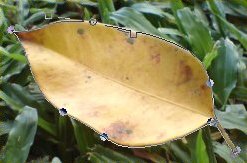
Some anchors are located on a long easy curved line. Other anchors represent a sharp commute in the focusing of the path (for example, at the steer of the leaf). There is a technique for doing this.
Some beginners lean to create jagged curves that aren't smooth. This is because they make too numerous anchor points and put on't know how to get down a proper curve.
The best direction to get a lasting, smooth curve is to use less anchors with good orienting. Once you get the position right, the handles are at that place to adjust the tilt of the curve American Samoa required.
Take another look at the example above. You'll see that the long, smooth lines don't have many anchors. In fact, the anchors that are in that location, are being used bu to change the counseling (operating theater intensity) of the slant.
When I created the above course, I clicked to make over the anchor, past I well-adjusted the handles. If, subsequently doing this, I found that the bender wasn't quite a right, I simply "Undid" my anchor (Ctrl+Z) and tried again - this time placing the anchor in a antithetical spot.
Straight Lines
Drawing straight lines are the easiest affair to achieve with the itinerary tool. To draw a erect railway line:
- Cluck where you deficiency the trabeated line to start
- Click where you want the straight line to last

Curves
Creating a curve is where many beginners run into disoblige. When creating curves, beginners often find that it's difficult to control on the nose where the path runs. Simply drafting an accurate curve is non American Samoa difficult as it may seem.
Three factors impact on acquiring a angelical curve with the Itinerary tool:
- Position of the linchpin
- Length of the handles
- Angle of the handles
Take a view the shadowing images:
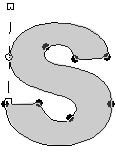
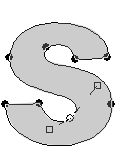
The right image highlights the handles at the top remaining of the shape. The left image highlights the handles at the buns, inner curve of the shape.
You can see that on both curves, the handles are uninterrupted (or almost straight). Happening the left mental image, the large, outer curve necessarily larger handles than the smaller inner curve (on the right trope). Also, both handles connected the left-hand image are roughly the same sizing.
On the right image, the handles are other sizes (the lower handle is shorter). This is to faciliate the differently shaped curves on from each one side of the anchor.
Corners
Often when you draw a course, you will need to create a corner immediately after a crook. The curved shape volition be passing in one direction, but you need to convert it with a acuate angle.
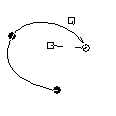
You create corners by bu touring the hold across. For example, in the following image, the height handle is perpendicular to the former handle - it's roughly at a 90 degree angle.
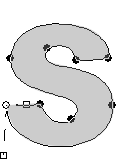
Creating a Corner
To make up a nook:
- Create your shape until you get to the corner
- Drag the handles (as per usual) to get the curve before the corner. Erstwhile you're glad with the shape before the corner, release the handle (Eastern Samoa per usual). Here's an example:
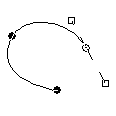
- In real time seize the handle and pull it crosswise in the direction you need the path to run. Example:
- Once you're willing with the angle of the handle, click where you want the next anchor. In this object lesson, I wanted another curve, thusly I clicked and dragged:
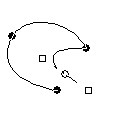
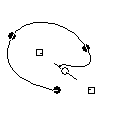
Thusly, stone's throw 3 was the secret agent gradation. This is where we specified what direction the path was going to take, and how sharp the lean was going to be. Here's what would have happened if we had missed stone's throw 3:
Create Selection From Path
Erst we've created the path, we give the axe convert IT into a selection. Once we have a selection, we can act up whatever we want with its contents.
Here's what our rif looks like when I create a selection from it's track:
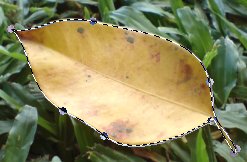
To create a selection from a path:
- Open the Paths dialogue box (Dialogs > Paths)
- Right click on the path
- Select Way of life to Selection
Don't worry, your path will stay on after you've successful your selection. In fact, you can create a selection from your paths As many times as you wish.
Removing The Background
So, now that I've selected the leaf, I can practice anything I like. For exemplar, I could remove the background signal:
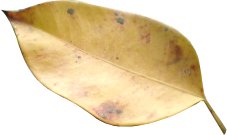
To remove the background, you can copy/glue the selection into another file. Alternatively, you can reverse the selection, then delete the background or fill IT with white.
To invert the above survival, we'd first choose the leaf, and then we'd reverse that selection (using Select > Invert).
Source: https://www.quackit.com/web_graphics/gimp/tutorial/drawing_paths_with_gimp.cfm

Post a Comment for "Draw Curve Path Tool Gimp 4"